Web Threads: Hannah Lydic
2/19/2026
By Christian Gravius, Associate Director of Athletics Public Relations
Web Threads are in-depth, behind-the-scenes stories from those at the heart of Richmond Athletics: student-athletes, staff members, loyal supporters, and more. Web Threads gives a glimpse into the ambitions, motivations, and sacrifices of the individuals who allow Richmond to excel at the highest levels of intercollegiate athletics and academics as well as the philanthropy that supports them every step of the way. Welcome to our web.

Golf is quiet.
There are no bands behind the tee box. No shot clock. No cheerleaders or raucous crowds to lift the energy. Just space, silence, and thought.
“It is 100% a mental game,” University of Richmond senior golfer and defending Atlantic 10 team and individual title champion Hannah Lydic says. “And that’s not a bad thing, but it is a double-edged sword. You’re like, okay, not only do I need to train myself physically, but I also need to train myself mentally.”
For most golfers, that statement is a cliché. For Lydic, it’s been the blueprint up to this point in her career.
At Richmond, she’s built her college experience the same way she builds a round of golf — rep by rep, day by day, present moment by present moment.
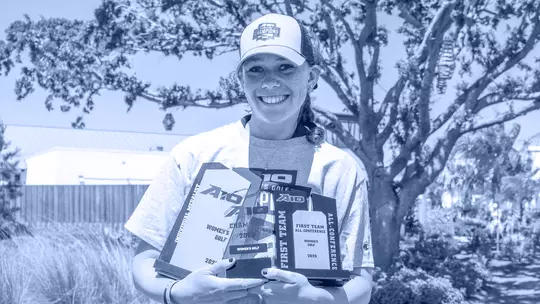
The Atlantic 10 championship she won last spring was the most visible result. What made it possible was much deeper.

Lydic’s story isn’t just about a champion. It’s about service, resiliency, and the resources and people who step in when needed.
It’s also about a student-athlete who signed up to give her full self to everything.
Long before she stepped onto campus, Hannah’s foundation for being a champion was already being laid.
Both of her parents are physical education teachers at Laurel Elementary School in Delaware. They teach together and make the 45-minute inland commute from their home in Ocean View each morning.
They also raised two daughters — Hannah and her younger sister, Sarah, who golfs at Wake Forest — with intention.
“When I was six and my sister was four years old,” Hannah says, laughing, “they put it into our heads that we were getting scholarships to play Division I golf.”
“At first it was forced on us,” she admits. “We would get up at five o’clock in the morning every single morning, even as little kids. My parents would get up as well and get training in — putting drills, setup drills. We were workhorses.”
There were emotional conversations along the way. Decisions at eight years old about specializing in golf over playing other sports. Moments of rebellion. But somewhere around middle school, something shifted.
“I don’t remember when I fully willingly started following his guidance,” she says of her father, who has always been her coach. “But it definitely transitioned — probably around 10 or 12 years old — and I went full-fledged into it.”
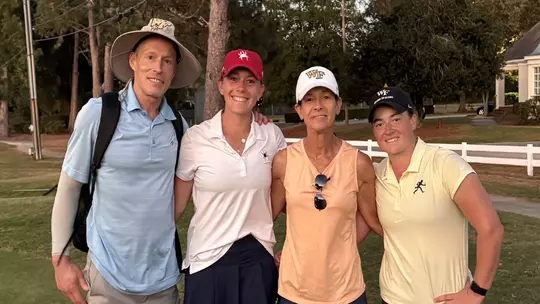
Golf became a metaphor for life.
Because it’s not easy. It requires something. Something more.
“Anything you learn in golf is going to apply to every aspect of your life,” she says. “Leadership, adversity, resilience.”
And reps. All kinds of reps.
At Richmond, Hannah’s life is not defined by just one rep.
Golf occupies the majority of her week. NCAA rules cap official team activities at 20 hours, but as she explains, “Golf is something that takes about four to six hours a day to be really good at it.”
She is a business administration major with a concentration in marketing. A Dean’s List student. An intern in the athletics marketing department. A leader in Fellowship of Christian Athletes, and a water girl during August's preseason football camp — a role she describes with pride.
“My favorite form of leadership is service,” she says. “I loved being able to serve the guys on the football team. They’re always going to come off the field and see me with a smile on my face and a cold water bottle. I have a sense of pride in my work when I do that.”
In FCA, where she helped grow weekly attendance from six students to more than 30, in her on-campus involvement, in the classroom, on the course— If she’s part of it, it’s likely gotten better.
“If I sign up for something, I give my full self to each thing that I do,” she says.
“I’m like a tree right now,” she added. “I’m at the base of the tree, and I’ve got a lot of branches. A lot of different interests. A lot of different skill sets. That’s only going to help me as a future employee.”

The reps aren’t just athletic, they’re personal.
On the course, Lydic says her teammates would describe her as intense.
She agrees.
“I’m very type A. I go all in and give my full self to each thing that I do.”
Intensity in golf can be dangerous. Too much and the mind spirals.
That is why Richmond golf’s partnership with mental performance consultant Holly Clark through Squad_U has become central to Lydic and the rest of her team’s growth.
The players complete in-depth profiles upon arrival in August, identifying natural strengths and motivators.
Hannah’s profile revealed something distinctive.
“I’m very visual,” she says. “It’s like a movie going on in my head throughout the entire day.”
On the greens, that matters.
“Putting is all lines,” she explains. “Whether it’s an arc or a straight line. What’s really cool about being so high in imagery is that I can see a lot of lines on the golf course.”
She calls putting the best part of her game, but her real strength may be what happens after a bad shot.
“The majority of what they say is to be present,” she says. “Being present does not allow you to focus on the past. The world will not end because I hit the ball in the woods. It’s more of an, ‘okay, what can I do now?’”
Take a deep breath and approach the next shot.

That mindset was tested her junior year.
Midway through her season, Lydic suffered a concussion during a tournament at NC State.
She had to withdraw.
The head injury required immediate rest, both physically and cognitively. That meant no practice, limited class attendance and minimal screen time.
For Lydic, the help came from everywhere — athletic trainers monitored her recovery, sports medicine staff adjusted protocols, academic deans coordinated communication with professors.
“We are not lacking help,” she says. “From all aspects of academics or athletics.”
For a sport that demands mental sharpness, the concussion was especially daunting.
When conference championship week arrived later in the season in Orlando, things were not as expected, once again.
The first day was brutal — 25-mile-per-hour winds, firm greens, water hazards that punished imperfection.
“We were in second or third place,” Hannah recalls. “And we knew that was not us.”
She was also sick.
“There’s a picture of me sipping ginger ale on the course,” she says. “I don’t think I ate much the entire trip.”
Oddly, she said it helped.
“I think that helped me quiet my mind,” she says. “Just be very aware and very present during each and every shot.”
For someone who admits she doesn’t like to dial down intensity, the illness forced her to.
“And when I do, it pays off,” she says.
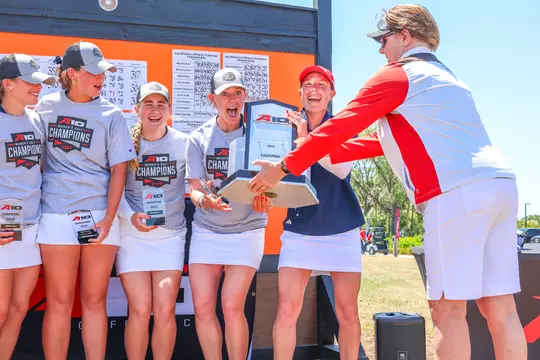
Over the next two rounds, she surged and so did the team around her.
The Spiders won, and Hannah captured the individual championship.
“That was the highlight of my college career so far,” she says. “The team was surrounding me. We’d all won as a team, but they were also celebrating my individual win.”
The reps had shown up.
The mental training. The adversity. The concussion recovery. The belief.
It all came together.
Now, entering her final season, the goals are clear:
Win conference again, leave an impact and enjoy every moment.
“I want to serve well,” she says. “That in itself is my life motto.”
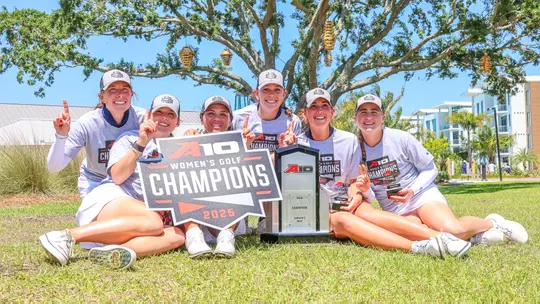
She wants to defend her title — but not at the expense of the little moments with her team. She wants to soak in dinners, practices, conversations. She wants to leave no regrets.
“Not slack in any areas that I’m going to regret,” she says. “Whether that’s putting in extra time on the golf course or being able to go out to dinner with the team and live all the memories.”
Winning matters. But so does leaving things better than you found them.
For those who support Richmond Athletics, from travel resources to sports medicine to academic advising, Lydic’s story is a reminder of what those investments truly mean.
Student-athletes gathering in Millhiser for tutoring, mental performance consultants building resilient competitors, athletic trainers coordinating care, professors extending grace without lowering standards and so much more.
“When you’re not necessarily as on as you want to be, you can lean into people, and they can lean into you,” Hannah says.
The University of Richmond community allowed her to recover from her concussion, to compete again, and most of all, gave her a foundation to win.
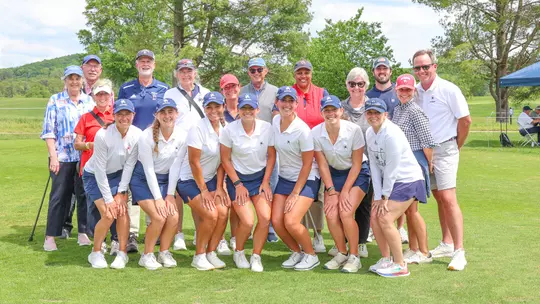
But perhaps most importantly, it allowed her to grow.
As a champion golfer, a campus leader and a servant-hearted teammate.
A young woman strengthened by every rep.
When asked what defines her college experience, she circles back to the simplest lesson she learned as a child waking up at 5 a.m. to practice.
“Putting in the reps,” she says. “You’re never going to be like, ‘Oh shoot, I wish I didn’t put in the work. It’s only going to make you stronger. It’s only going to bring you closer to your goals.”
On the course, that means seeing the line and trusting it.
In life, it means trusting that the work and the people who support it will push you forward.
Like Hannah knows, the University of Richmond community already has.
Lydic's story is just one of the many student-athletes at Richmond whose lives have been impacted by the support of Spider Nation. We are grateful to the loyal supporters who make these resources available to our 400 student-athletes and the opportunities they create for them!