Web Threads: Leadership
3/19/2026
Web Threads are in-depth, behind-the-scenes stories from those at the heart of Richmond Athletics: student-athletes, staff members, loyal supporters, and more. Web Threads gives a glimpse into the ambitions, motivations, and sacrifices of the individuals who allow Richmond to excel at the highest levels of intercollegiate athletics and academics as well as the philanthropy that supports them every step of the way. Welcome to our web.

Richmond Athletics’ Spider Performance (SP4) works to provide student-athletes a well-rounded experience during their time on campus. Athletic, academic , personal and professional success are the pillars of SP4’s development of the entire individual and building champions for life. At the forefront of this effort is the Spider Leadership Initiative.
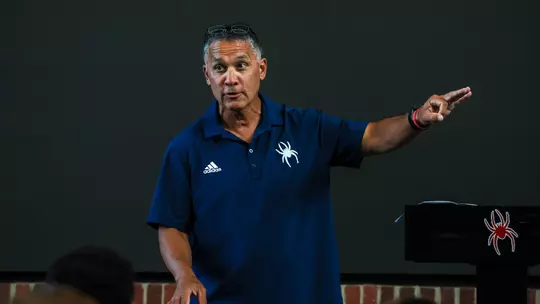
“Leadership is the bridge that transforms potential into purpose and brings people together,” said Senior Associate Athletic Director Lauren Wicklund.
“When we integrate personal leadership into the curriculum,” said Wicklund, “we empower our student-athletes to lead themselves with intention and recognition that their mindset, behaviors, and influences directly impact their performance, their teams, and their future beyond graduation.”

The program shifts in real time to meet the leadership needs of current Spider student-athletes. This year’s theme, “Shine Your Light,” is about being consistent, authentic, and intentional.
The curriculum includes interactive and mixed group sessions that help reinforce that growth happens in the daily moments, and meaningful wins come from staying committed and continuing to show up, especially when things get tough.
Over the course of the academic year, each session explores key leadership principles, like protecting standards and shaping culture, accountability requiring courage, empathy strengthening communication and trust, composure building credibility in high-pressure moments, and the notion that leadership is demonstrated daily through small actions.

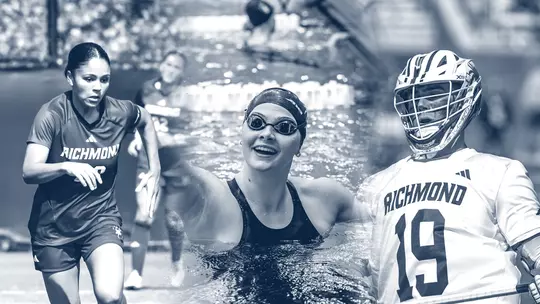
Presley Baber, a junior on the swimming team, credits the program for her evolution as a leader. “Prior to being selected for [this year’s] leadership cohort, I would say I always aspired to be a leader. However, the expression of my leadership was somewhat accidental.
“I’ve always enjoyed getting to know my teammates as people, in and out of the water, and this led to a level of trust that allowed me to show up as a leader through words of encouragement and advice,” Baber said.
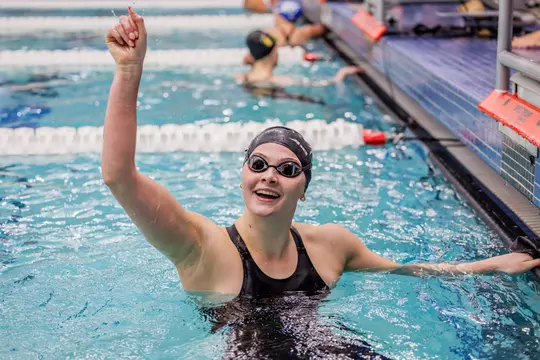
In February, Baber scored 207 points to help Richmond secure the 2026 Atlantic 10 Championship, its first since 2021. She won gold in the 200-yard medley relay, 200-yard freestyle, 400-yard freestyle relay, and 100-freestyle. She also earned silver in the 400-yard medley relay and 100-yard breaststroke and bronze in the 50-yard freestyle.
“We’ve discussed how different people respond to various types of leadership. It is so important to understand your team at a level where you can switch leadership styles to be a more effective leader,” Baber said. “Some people need redirection; some people need grace and knowing when to give what is crucial to good leadership.”
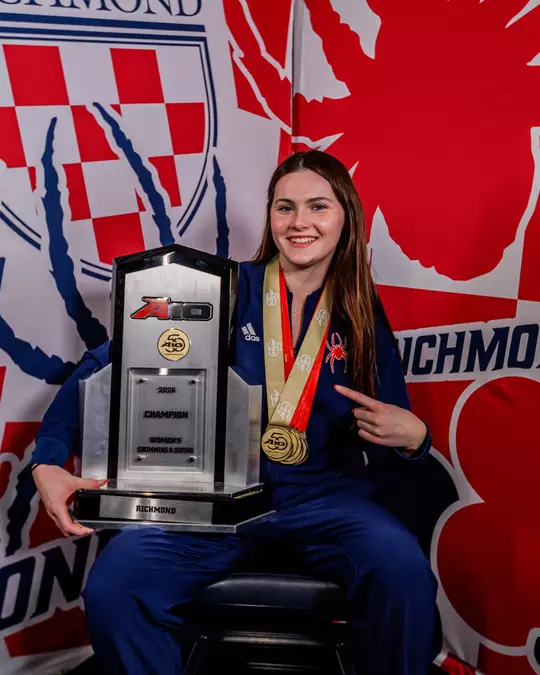
The program has evolved from earlier leadership models and now is has grown into a selective cohort based system where coaches identify student-athletes who would most benefit from an immersive leadership development experience.
The philanthropic support the program has received in recent years enables SP4 to continue to intentionally invest in developing the curriculum and adding more experiential learning opportunities.
“This shift allows for deeper mentorship, stronger skill development, and a more intentional leadership journey for participants,” Spaulding said. “Each student-athlete is also paired with a dedicated staff member, separate from their coach, who also helps guide their development journey.”
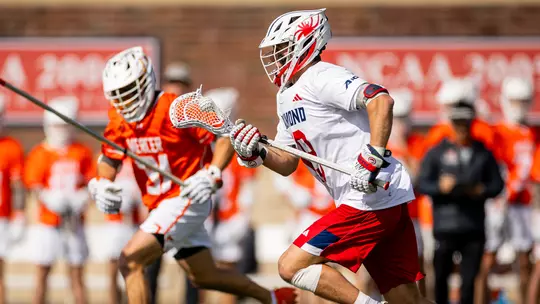
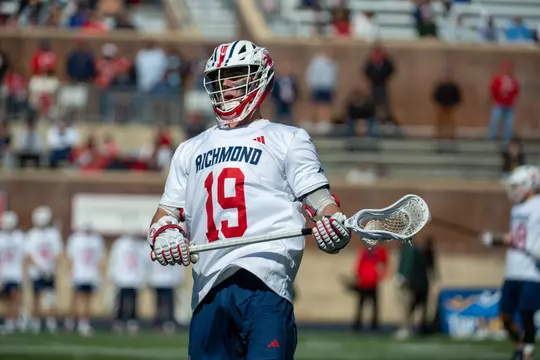
Jack Pilling, a senior on the nationally ranked men’s lacrosse team, feels comfortable being the loud voice on the field with his squad. “I’m an outgoing person and feel comfortable in social settings, which has made me a naturally vocal presence both on and off the field.”
“[My leadership style] comes from observing past teammates and captains and molding what I learned from them into my own personality,” Pilling said. “I believe using past experiences is one of the best ways to grow as a leader and motivate as many people as possible.”
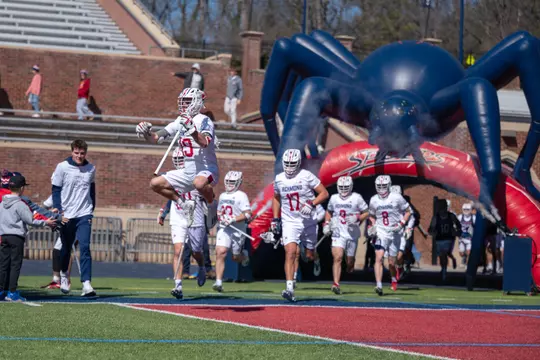
Midway through a 14-game regular season, Pilling has taken a few moments to understand how brief a college sports career can be.
“Realizing how limited our time is to play a college sport has pushed me to be the best leader I can be,” Pilling said. “With only one semester left, my main focus is motivating those around me and bringing out the best in my teammates. Gaining the maturity to recognize this and striving to leave the program better than I found it has been a major part of my growth as a leader.”
Just under a year after graduating in May of 2025, women’s soccer alumna JoJo McShane has already used the leadership skills she was able to hone as a student-athlete and a member of the leadership cohort.
“I really value my time spent in the group,” McShane said. “Everything that is discussed comes up in real-life situations, and the conversations between the student-athletes naturally foster dialogue between different personality types and people.”
McShane is a graduate student in the School of Continuing Studies at Georgetown University. She is working on a Master of Professional Studies in Journalism degree and interning with Monumental Sports and Entertainment’s Corporate Social Media team, all while also holding a part-time job in the fitness world.
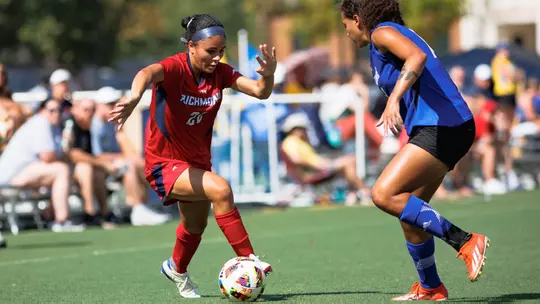
“The leadership program helped me navigate a space [a story pitch class session] that could be viewed as negative or critical to some. Because of the skills I learned, I can take feedback and apply it, using this skill to my advantage rather than letting criticism bring me down.” McShane said.
When she’s at her internship or job, McShane uses her experiences as a leader on the women’s soccer team, Student-Athlete Advisory Committee, Student-Athletes of Color Alliance, and the Sirens Acapella Group as well.
“[The leadership program] teaches you a lot about how to jive with different perspectives,” McShane said. “The best leaders are incredible at reading people and situations and delegating tasks to people based on their strengths, and I’m striving to improve on this skill every day.”
“Once I found my voice was valued in those groups, I gained more confidence and felt comfortable with taking the lead on projects, tasks, or songs,” McShane said. “I also spoke up for people who were softer spoken but had amazing contributions to offer. Just because someone is quiet, it doesn’t mean their opinions shouldn’t be valued.”

Baseball alumnus Brian Alas, ’08, GB’09, and Managing Director at Boxwood Partners, proudly brings in Spider student-athletes to intern and work at the investment banking firm. Since he returned to Richmond to work at the equity firm in 2013, Alas has helped hire 25-plus Richmond student-athletes for the company’s internship program and has nine former Richmond student-athletes on staff currently.
“Having been a Spider student-athlete myself, I experienced firsthand the discipline required to balance Division I athletics with Richmond’s rigorous academic expectations,” Alas said. “Competing at that level while meeting the demands of the classroom requires strong time management, discipline, and accountability – qualities that translate direction into a professional environment.”

“When I see a UR student-athlete on a resume, I already have a sense of the person behind it. The University doesn’t just recruit talented students and athletes – it develops them,” said Alas.
“Also, coachable athletes make coachable professionals,” Alas continued. “People who actively seek feedback, take ownership of their performance, and consistently look for ways to grow faster, adapt quickly, and become strong contributors to the teams they’re part of. It’s one of the reasons UR student-athletes transition so well from campus into their careers.”
“What separates [student-athletes] is their resilience, competitive drive, and the value of team success,” said Alas. “As the saying goes, ‘hard work beats talent when talent doesn’t work hard’. Student-athletes know how to contribute to something larger than themselves and support the people around them – a quality that is essential in any organization.”
Today, it might “just” be a game, celebrating with teammates after a victory, and sitting in class discussing how to solve hypothetical world problems. In a snap of the fingers, it’s graduation and joining the workforce.
“Learning to be a leader now, in a safe environment with the guidance of mentors, teammates, and peers has been invaluable experience that I can use in higher-pressure situations of being in the workforce,” said Baber.
“This program, along with the men’s lacrosse program as a whole, has taught me that it’s never too early to be a leader,” Pilling said. “Leadership can begin as early as your freshman year, even if it looks different at that stage. This mindset directly applies to entering the workforce. One phrase we use often on the team is “find work, add value,” which translates to starting your career – especially when you’re new and still earning your place within an organization.”

The leadership programing helps Spiders determine their own leadership skills and provides a path to allow them to leave Richmond with the confidence and capabilities to lead in any potential circumstance. With the lifelong skills that are built at Richmond, our student-athletes are able to take advantage of many post graduate opportunities, whether a full-time job, internship or playing professional sports.
These results are reflective of the investment of the entire Richmond community and the dedication to continuing to support programs like SP4 so Spider student-athletes develop into champions for life.
Baber, McShane and Pilling's story is just one of the many student-athletes at Richmond whose lives have been impacted by the support of Spider Nation. We are grateful to the loyal supporters who make these resources available to our 400 student-athletes and the opportunities they create for them!