
University of Richmond Athletics
Spiders Dive Deep Into South Africa and Cape Town - Blog #7
05/27/2018 | Football, General, Women's Basketball, Women's Track & Field, Men's Basketball
Junior football student-athlete Kevin Johnson, sophomore men's basketball student-athlete Nick Sherod, freshman women's basketball student-athlete Alex Parson and junior women's track student-athlete Marshea Robinson will spend May 16-27 exploring South Africa and the United Arab Emirates. Throughout their trip, the student-athletes will be reporting back to www.RichmondSpiders.com with blogs documenting their journey.
Blog Number Seven – By Marshea, Alex, Kevin and Nick
Hi Spider Fans,
Let us begin by telling you -- this has been an unbelievable journey that is unfortunately coming to a close. From visiting the United Arab Emirates to spending a week in Cape Town, this experience has been one to never forget. We have had so many great experiences, from thoroughly enjoying our time with The University of Richmond Faculty (being able to spend time with them outside of the classroom setting and in a more experiential learning environment was amazing) to touring the University of Cape Town, meeting with their athletic staff, and eating lunch with their soccer players. These experiences provided great outlook into another culture like that of South Africa. The second to last full day in Cape Town consisted of us spending our time enjoying small towns like Stollensbosch and Paarl. These areas surrounding Cape Town gave us yet another perspective of the landscape and variety in economical situations present within South Africa. On our drive outside of the city we saw shanties and townships, which was a different side of Cape Town we had yet to truly experience. We have driven by them this week, but to actually insert ourselves into those communities gave much light to the completely different areas of Cape Town¾one in an unimaginable state of extreme poverty, was extremely hard to wrap our heads around. Cape Town has so much to offer and yet, so many people (many those who are colored) struggle after being forced out of the city to the areas now known as the flats, establishing townships on their own. Visiting the towns of Stollensbosch and Paarl were so unfamiliar and did not even appear to be like what we had known as Cape Town. The beautiful rolling hills, upscale houses, and quaint towns with much character were much less diverse and our tour guide even spoke to us about how much racism is still very prevalent in this areas. Even with less poverty in these towns, on one side of the street there would be nice homes, and on the other side of the railroad track, there would be shacks. The varying degree of wealth was startling. Even more so, places we visited to eat did not contain much diversity, unless you were referring to the staff.
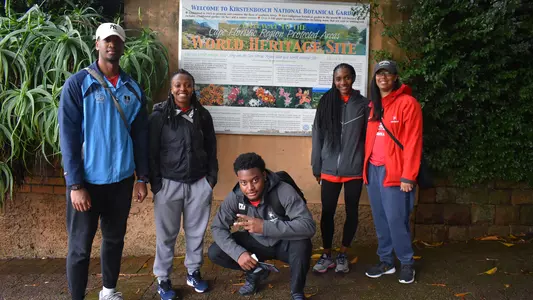
Our penultimate full day in Cape Town was one of the most impactful days throughout the trip. We started this rainy day off in the Kirstenbosch Botanical Garden. It was absolutely beautiful, even in the fog and mist, and also gave us a unique view of some of Cape Town's most beautiful flowers and interesting wildlife. The natural springs, clear water, and fauna surrounding made us feel as though we were entering into the rainforest. The sights and sounds were peaceful and calm – essentially preparing us for our visit into the townships. The townships in the city are not something easy to visualize and we cannot feasibly paint an accurate picture of these settlements – they are something you have to see in person to truly feel the impact. Only a few minutes away from the beautiful Kirstenbosch Garden, bordering streets lined with upscale houses, lie the shacks where families live without running water or electricity. The first township we visited, Langa, the oldest township in Cape Town is known as being quite dangerous. What struck us the most about this tour was how our tour guide was even weary and nervous going through some of the townships, even though he grew up in Cape Town. For example, in front of one of the restaurants, there was a man picking up money while another man was guarding him holding an AK-47. Our guide quickly got us to safety as he was afraid there might be a shootout. Other streets were laden with protest remnants, blocking the road, while these conditions were the realities of so many people which reside in the many different townships. This put into further perspective the conditions of these areas, as the townships rarely have basic living needs, such as electricity and water, and often there are kids running around shirtless or without shoes. The people who live in these townships are the direct result of apartheid, and now live in the poorest of conditions, unimaginable to the American. Conditions in this third world nation are so bad that the people have almost given up – they see little hope, and thus fall to a life of violence and crime.
Marshea, Kevin, Nick, and Alex
Blog Number Seven – By Marshea, Alex, Kevin and Nick
Hi Spider Fans,
Let us begin by telling you -- this has been an unbelievable journey that is unfortunately coming to a close. From visiting the United Arab Emirates to spending a week in Cape Town, this experience has been one to never forget. We have had so many great experiences, from thoroughly enjoying our time with The University of Richmond Faculty (being able to spend time with them outside of the classroom setting and in a more experiential learning environment was amazing) to touring the University of Cape Town, meeting with their athletic staff, and eating lunch with their soccer players. These experiences provided great outlook into another culture like that of South Africa. The second to last full day in Cape Town consisted of us spending our time enjoying small towns like Stollensbosch and Paarl. These areas surrounding Cape Town gave us yet another perspective of the landscape and variety in economical situations present within South Africa. On our drive outside of the city we saw shanties and townships, which was a different side of Cape Town we had yet to truly experience. We have driven by them this week, but to actually insert ourselves into those communities gave much light to the completely different areas of Cape Town¾one in an unimaginable state of extreme poverty, was extremely hard to wrap our heads around. Cape Town has so much to offer and yet, so many people (many those who are colored) struggle after being forced out of the city to the areas now known as the flats, establishing townships on their own. Visiting the towns of Stollensbosch and Paarl were so unfamiliar and did not even appear to be like what we had known as Cape Town. The beautiful rolling hills, upscale houses, and quaint towns with much character were much less diverse and our tour guide even spoke to us about how much racism is still very prevalent in this areas. Even with less poverty in these towns, on one side of the street there would be nice homes, and on the other side of the railroad track, there would be shacks. The varying degree of wealth was startling. Even more so, places we visited to eat did not contain much diversity, unless you were referring to the staff.
Our penultimate full day in Cape Town was one of the most impactful days throughout the trip. We started this rainy day off in the Kirstenbosch Botanical Garden. It was absolutely beautiful, even in the fog and mist, and also gave us a unique view of some of Cape Town's most beautiful flowers and interesting wildlife. The natural springs, clear water, and fauna surrounding made us feel as though we were entering into the rainforest. The sights and sounds were peaceful and calm – essentially preparing us for our visit into the townships. The townships in the city are not something easy to visualize and we cannot feasibly paint an accurate picture of these settlements – they are something you have to see in person to truly feel the impact. Only a few minutes away from the beautiful Kirstenbosch Garden, bordering streets lined with upscale houses, lie the shacks where families live without running water or electricity. The first township we visited, Langa, the oldest township in Cape Town is known as being quite dangerous. What struck us the most about this tour was how our tour guide was even weary and nervous going through some of the townships, even though he grew up in Cape Town. For example, in front of one of the restaurants, there was a man picking up money while another man was guarding him holding an AK-47. Our guide quickly got us to safety as he was afraid there might be a shootout. Other streets were laden with protest remnants, blocking the road, while these conditions were the realities of so many people which reside in the many different townships. This put into further perspective the conditions of these areas, as the townships rarely have basic living needs, such as electricity and water, and often there are kids running around shirtless or without shoes. The people who live in these townships are the direct result of apartheid, and now live in the poorest of conditions, unimaginable to the American. Conditions in this third world nation are so bad that the people have almost given up – they see little hope, and thus fall to a life of violence and crime.
Marshea, Kevin, Nick, and Alex




Players Mentioned

QB
/ Football
G
/ Women's Basketball
Sprints
/ Women's Track & Field
G
/ Men's Basketball2026 SPIDYS Awards
Thursday, April 09
Special Olympics Virginia - Track and Field
Thursday, April 09
Giles-Spratley Collegiate Post
Tuesday, April 07
Blake Houser Making Offseason Strides
Tuesday, April 07